
Research & validation
Built with the people we build for
Inclusion is not a hypothesis. It is a discipline. Every feature is shaped with workers and employers in their own language, in their context, before it scales.
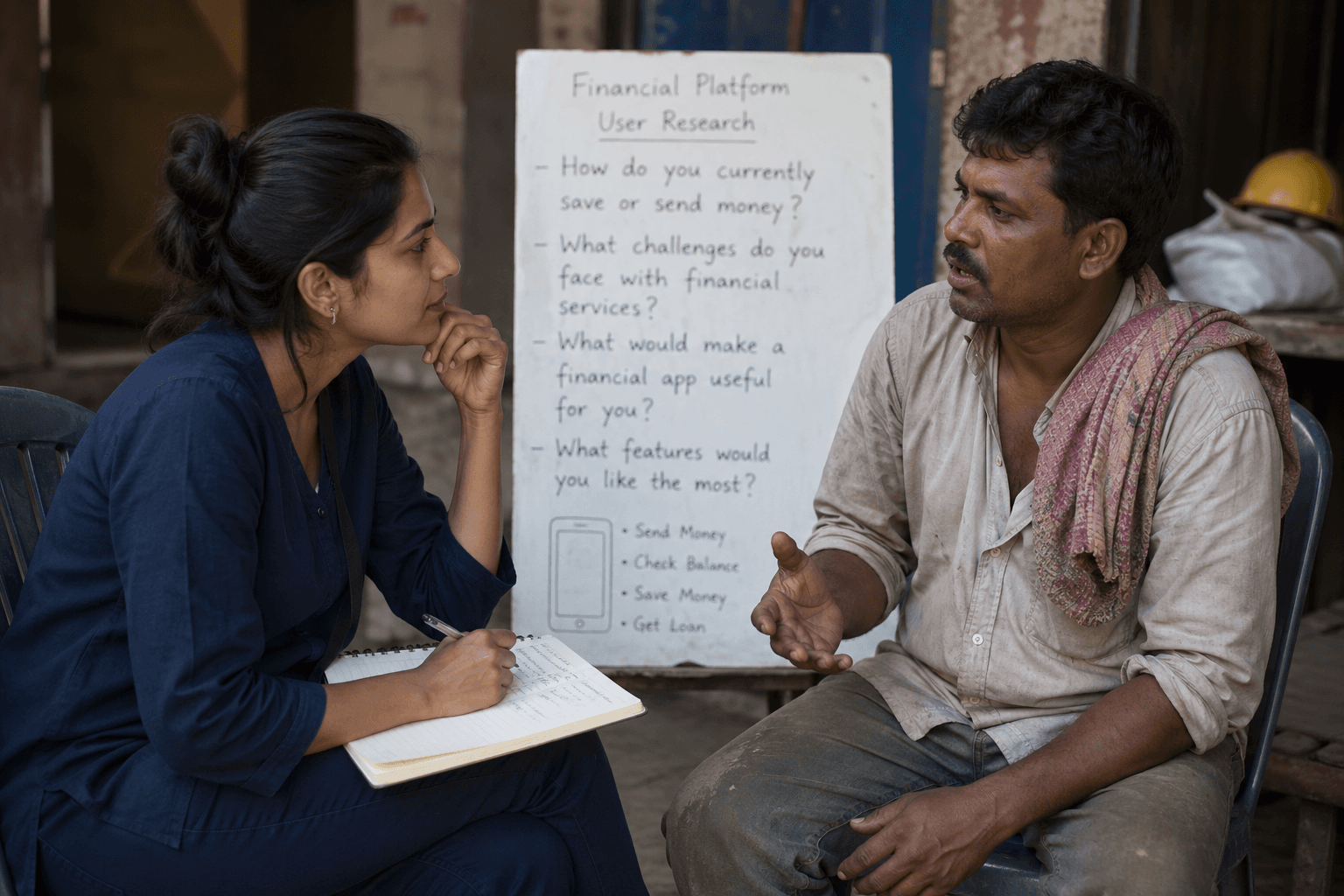
At myZoi, research is not a phase. It is a habit. We sit with workers in labor accommodations, walk payroll runs with HR teams, and study how money moves through households across borders.
Our approach combines three things: a clear design framework, deep qualitative research, and continuous product analytics after launch. None of them work in isolation.
How we frame problems
The Double Diamond
We use the Double Diamond framework from the UK Design Council to solve the right problem before building the right solution.
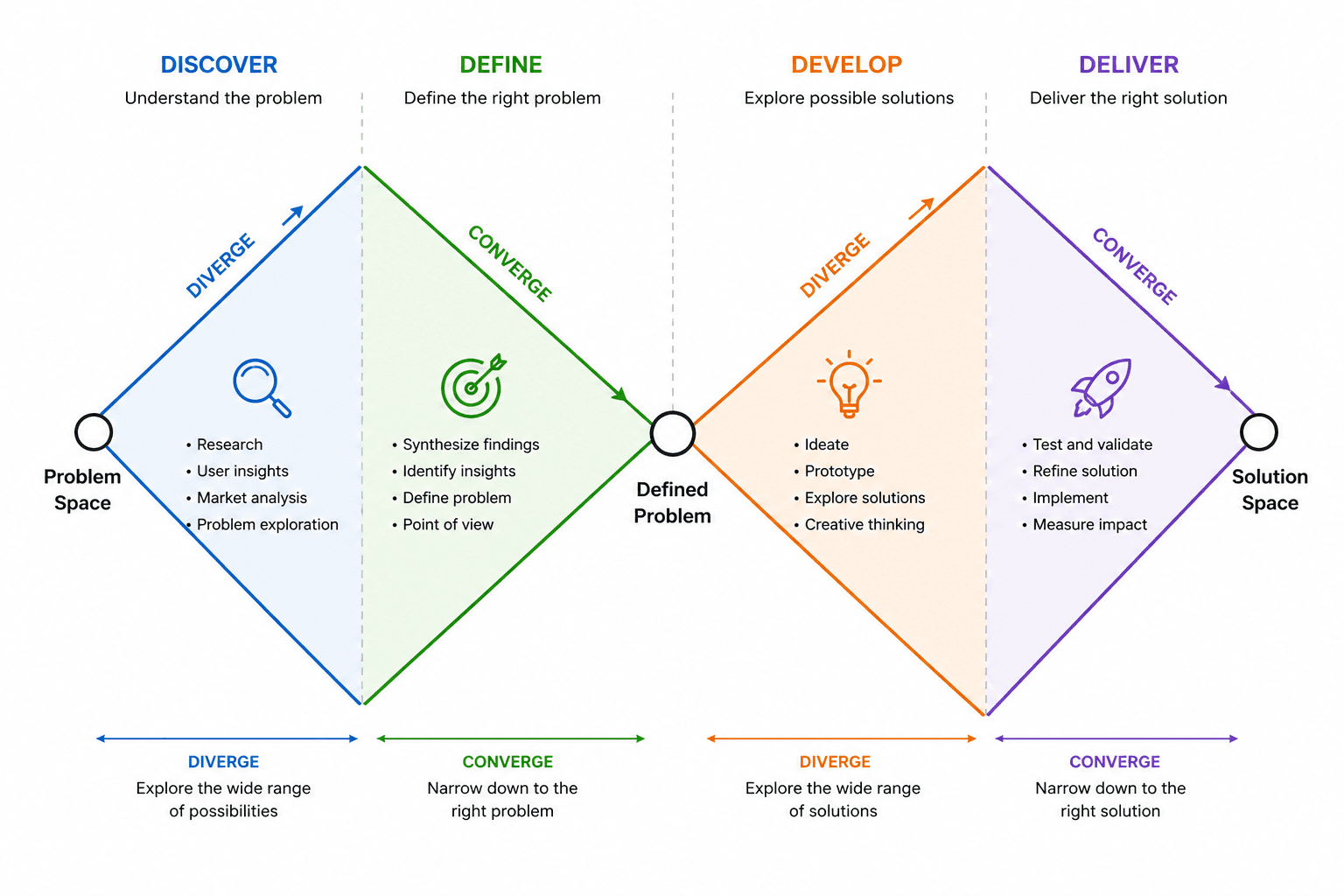
1. Discover
We spend time with workers, employers, and partners to understand the problem as people actually live it.
2. Define
We turn field insight into a clear problem statement that names the human need, not just a product idea.
3. Develop
We test many solution paths through sketches, prototypes, and low-fidelity trials with real users.
4. Deliver
We pilot what survives, learn what breaks, and then scale only when the experience proves itself.
Example in practice
When we redesigned remittance for first-time smartphone users, the friction was not fees. It was fear of entering a recipient name in a non-Latin script. That insight changed the whole feature.
How we listen
Qualitative research, in their world
Surveys tell us what happened. Qualitative work tells us why. We spend time with workers and employers where they live and work, and in the languages they think in.
Contextual inquiry - We observe and interview workers in real moments: on the bus, in labor housing, and between shifts.
Worker interviews in 12+ languages - Sessions are run with native speakers, on workers' own phones, in familiar settings.
Diary studies - For longer questions, participants record money decisions and pain points over multiple weeks.
Employer co-design sessions - HR, payroll, and ESG leaders review real edge cases with our product team.
Empathy is not a slogan. What people share depends on whether they trust us enough to be honest.
How we learn at scale
A feedback loop that never closes
With 100,000+ employees onboarded and AED 1B+ moved through the platform, we are accountable for learning from every tap, transfer, and drop-off.
- Behavioral patterns - We track where users pause, retry, or abandon a flow, and what that says about trust and clarity.
- Funnel and onboarding analytics - We monitor time-to-first-salary, step-level drop-off, and success rates by language and nationality.
- Support and community signals - Themes from multilingual support and community channels feed back into product decisions every week.
- Employer outcome metrics - We measure adoption, payroll integration health, and inclusion outcomes employers track for ESG.
Every product decision points back to evidence. Every release is measured by human outcome, not feature count.
Why we do it this way
Research with a purpose
Our mission is radical financial inclusion. If it is not for everyone, it is not inclusion. That standard drives how we research and what we prioritize.
We hire researchers who speak user languages, pay participants fairly, and design for people with older phones, slower connections, and lower digital familiarity.
- 1. Listen before we build. No feature ships without evidence from the people it is meant to serve.
- 2. Iterate in the real world. We pilot with real workers and real employers, not synthetic lab conditions.
- 3. Close the loop. What we learn continuously returns to product, partner, and community experiences.